 Carlo DeLuca, Master plumber
As an Amazon Associate I earn from qualifying purchases. Some links are affiliate links.
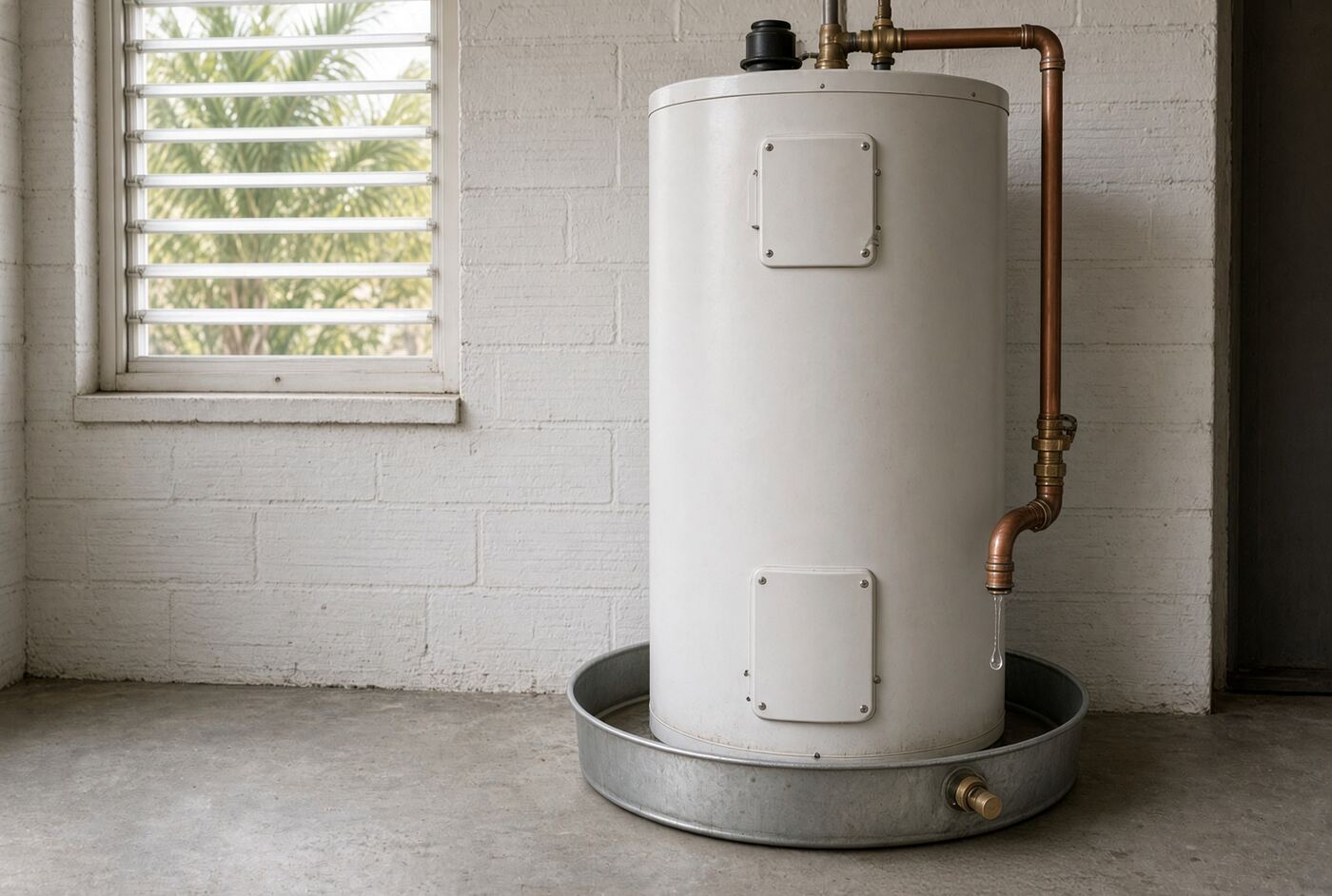
After work the garage door was up a foot. The water heater sat in the corner, tank quiet, pan not quiet. A copper pipe left the side of the tank and stopped a few inches over the galvanized tray. The end was open. A drop left it. The pan drain stub at the rim was dry. Palms moved in the louvered window. That is a coastal Florida garage on October 5, not a pan that never had an outlet.
A wet heater pan has a reputation. It earned that reputation on the day the stub was capped and the tray was a bucket. Today the stub was open and dry. The drop was leaving the relief pipe.
Reed’s note this morning is the cabana bath with the door shut, not a pipe: the cabana bath stayed shut. The pan that had nowhere to go is an older note: the heater pan had nowhere to go. Name the relief pipe before you name the outlet.
Why the open end matters
A temperature-and-pressure relief valve is a safety device on the tank. The pipe on it carries a discharge to a safe place, down near the floor or into a pan that can take a short dump. The end stays open. It is not a drain you cap. It is not a place to hang a rag.
A warm drip at that open end is the valve talking. A worn seat, a long recovery, a lever someone lifted and never seated. I am naming which pipe the water left.
The copper end is wet and the pan drain stub is dry. The film in the tray is warm if you are careful with a knuckle, not cold like a sweating tank. The block is dull only on the side the pipe faces. A cold tank that beads is a different job: the kids-bath tank wept on the tile. A tankless that drips into a paint bucket is a different machine: the tankless sat over a paint bucket.
This is not a coil. If the garage heater is the only wet metal and the closet pan is dry, do not start in the closet. Yesterday’s closet note was a bare supply beading into a tray: the closet supply line sweated into the pan. Different room. Different pipe.
After-work check
Before you blame the pan outlet. Before you drop a bucket under the pipe and leave for the night.
- Open the garage or the utility door. Find the copper that leaves the side of the tank, not the cold inlet and not the pan stub.
- A drip that starts at the open end and falls into the pan is the relief pipe. A drip that beads the whole tank from the bare cold pipe is sweat. Wipe both. Wait a minute. Name the one that comes back.
- Feel the pan film with the back of a finger, briefly. Warm means the valve side. Cold means the tank is sweating into the tray. Do not hold a hand under a pipe that is running.
- Dry stub, wet pipe end: the outlet is not the story today. Wet stub and a stream at the outlet: that is the older pan note.
- A dull stripe on the block, or a stain that walked off the pan lip onto the slab, is the path. Log it.
Do this the afternoon you notice the film. One glance is a rumor. The pipe that drips again after you wipe it is a pattern.
Do not
- Do not cap the relief pipe. That pipe is the way out if the valve opens for real. A plug turns a drip into a different problem.
- Do not wire the lever down, and do not hang a bucket on the lever so it stays cracked. Leave the lever alone.
- Do not cut the pipe on a live heater. This note names the drip. A licensed plumber owns the valve.
- Do not pour the pan onto the slab and call the valve done. The film walks. The pan that had nowhere to go already covered a stub with no path.
- Do not size a machine for the garage because the pan is wet. Garage air is Reed’s beat after the pipe is named. The garage is its own climate. I am naming a relief pipe.
Run this
- After work, confirm the drip starts at the open end of the relief pipe and the pan stub is dry, so you are not re-running the pan that had nowhere to go.
- A slow warm bead: wipe, wait, write down whether it returns. If the pipe is running, not beading, shut the cold inlet and stop. Do not lift the relief lever. Get a licensed plumber.
- If the film walked off the pan toward the door, bag the threshold. Pin any dull drywall the pipe faced. When the valve is seated or replaced, hand relative humidity (RH) in the garage to Reed. A quiet pipe does not dry a garage that held the afternoon.
A USA flood bag at the garage threshold buys time if the pan walks toward the house. It does not reseat a relief valve. It keeps the film off the hall.
If the wall already took the spray, pin it. A USA-made pin meter tells you whether the dull stripe is surface or already in the paper. Looks-dry is not dry. Reed’s meter note is the handoff after the garage is honest: drywall can look dry and still be wet. The meter guide is the same job: best moisture meter for drywall after a leak.
FloridaDamp is an Amazon associate — we earn from qualifying purchases. I still point at these two because a USA flood bag holds a garage-threshold weep off the hall and a USA-made pin meter reads the wall the pipe faced, not because anyone paid for a review.
Relative humidity (RH) in that garage is Reed’s beat after the pipe is named. House-wide context sits in the Florida humidity home guide. If the film already left the pan, the dry-out kit is the next page: post-storm dry-out.
October still finds a relief pipe that was aimed into the pan and left open, which is the right end, and left dripping, which is not a plan. Name the pipe. Leave the cutter in the truck.
If it’s useful, it’s beautiful.