 Carlo DeLuca, Master plumber
As an Amazon Associate I earn from qualifying purchases. Some links are affiliate links.
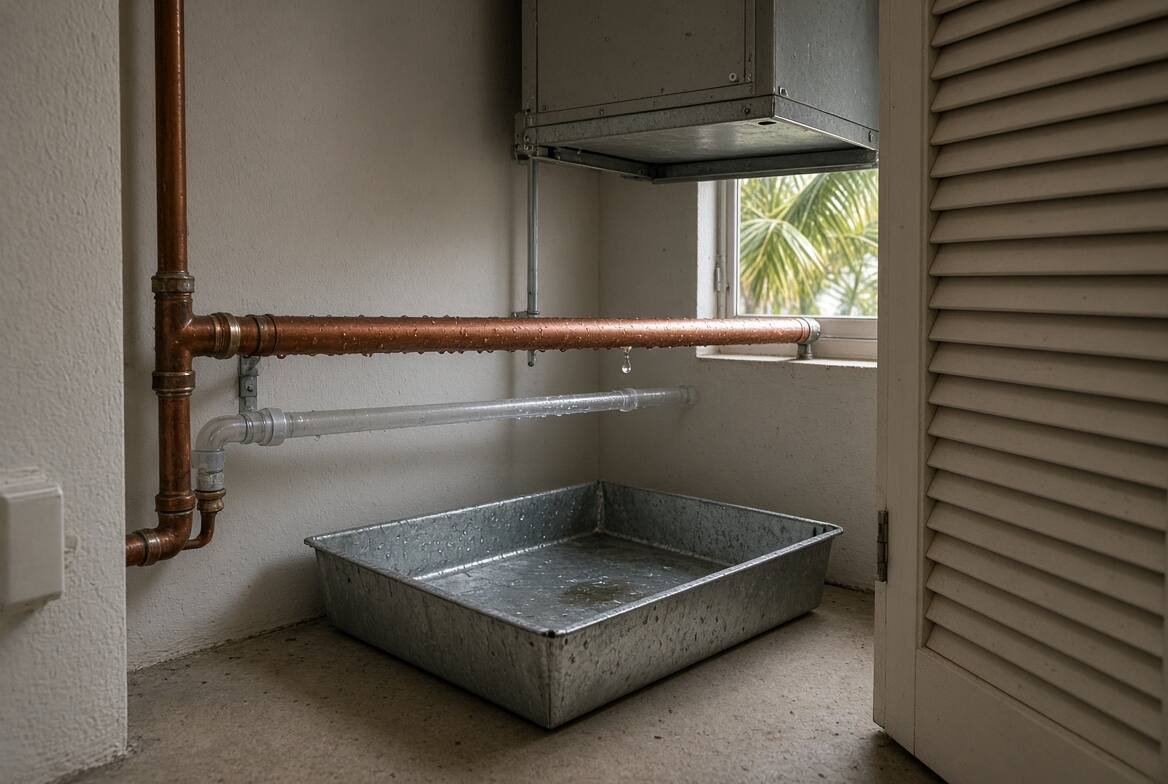
The louvered door was already cracked. After work the closet smelled like a wet pan, and the galvanized tray under the air handler had a film. The clear PVC beside the copper was not pouring. A bead left the bare supply and fell. Palms sat in the window. That is a coastal Florida air-handler closet on October 4, not a coil that quit.
People name the pan first. The pan is the thing they can see. A wet tray in a closet has a reputation. It earned that reputation on other days. Today the drop was leaving the copper, and the drain was not the story.
Reed’s living-room note this morning is fabric against glass, not a pipe: the sofa against the glass held night. The closet that actually dripped from the machine is an older note: the closet was dripping. Name the copper before you name the coil.
Why the copper beads
A cold supply in an air-handler closet is a bare pipe in wet air. The water comes in cooler than the closet. October does not retire that. The door is louvered so the handler can breathe. The closet stays close. The pipe sweats. The pan is under it because the handler already needed a tray. Gravity does the rest.
Three things show up the same afternoon. The copper is beaded on the bottom and the PVC is only splashed. The pan has a film and no stream at the outlet. The drywall under the tray is dull, and the stain stops where the drip walked, not where a drain backed up. A hairline of water looks like a failed drain. On a sweating supply it comes back on the metal after you wipe it.
This is not the closet drain that had no fall: the closet drain had no fall. That note is a pipe that cannot leave. This supply is not trying to leave. It is beading. It is not the trap that sat green: the closet trap sat green. It is not the tank that wept on kids-bath tile: the kids-bath tank wept on the tile. A tank sweats in a bath. This copper sweats over a pan. Do not walk the soffit first: the soffit secondary never dripped.
Read the drop, then stop
Open the door. Dry the pan lip with a towel. Watch one drop. If it leaves the copper, you have a name. If it leaves a fitting on the drain and the PVC is running, you are in the closet-drip note, not this one. If the copper stays dry and the pan fills while the handler runs, the machine is the source. Wipe the pipe. Wait. Sweat comes back on the bare metal. A drain leak comes back at the joint.
Do not cut the supply to “see if the beads stop.” That line is live. This note is not a dispatch. Do not tape the copper and call the closet fixed. Do not pour the pan into the drain and walk away if the drywall under the tray is already dull. Do not blame the coil because the tray is wet. Do not open the handler cabinet to chase a drip you already watched leave the pipe.
If you cannot tell the supply from the drain, stop. Get a licensed plumber on site.
After-work check
After work, before the lights go off in the hall, open the louvered door. Look at the copper, then the pan, then the floor at the threshold. A beaded supply and a quiet drain is the tell. A new ring on the concrete means the film already walked. The closet guide is the room around this pipe, not a second write-up of the drip: damp Florida closet.
Morning check is the same door. Before coffee, wipe the bottom of the copper with a dry finger. If it beads again while the handler is off, the supply is still the source. Do not start the air to “see if the pan fills.” You already have a name.
Hold the threshold, then hand off the air
A USA flood bag at the closet threshold buys time if the pan walks onto the floor. It does not insulate the copper. It keeps the film off the hall.
If the drywall under the tray already took the film, pin it. A USA-made pin meter tells you whether the stain is surface or already in the paper. Looks-dry is not dry. Reed’s meter note is the handoff after the closet is honest: drywall can look dry and still be wet. The meter guide is the same job: best moisture meter for drywall after a leak.
FloridaDamp is an Amazon associate — we earn from qualifying purchases. I still point at these two because a USA flood bag holds a closet-threshold weep off the hall and a USA-made pin meter reads the wall the pan wet, not because anyone paid for a review.
Relative humidity (RH) in that closet is Reed’s beat after the copper is named. A pan that texts you is a different assembly, for the day the drain is the source: the overflow pan should text you. House-wide context sits in the Florida humidity home guide. I am naming a supply line.
Run this
- After work, open the air-handler closet. Confirm the drip starts on the bare copper. Confirm the clear drain is not running, so you are not chasing the closet that was dripping.
- Wipe the pipe. Wait. If the beads come back on the metal and the drain stays quiet, the supply was the source. Do not cut the line. If you cannot separate the pipe from the drain, stop and get a licensed plumber.
- Bag the threshold so the film does not wick the hall. Pin any dull drywall under the tray. When the copper is wrapped or the closet air is no longer beading it, log relative humidity (RH) in the closet for a week and hand that log to Reed. A dry pipe does not dry a closet that held the night.
October still sweats a bare supply. The pan under it is a bystander until the drain is running. Name the copper. Leave the cutter in the truck.
If it’s useful, it’s beautiful.