 Carlo DeLuca, Master plumber
As an Amazon Associate I earn from qualifying purchases. Some links are affiliate links.
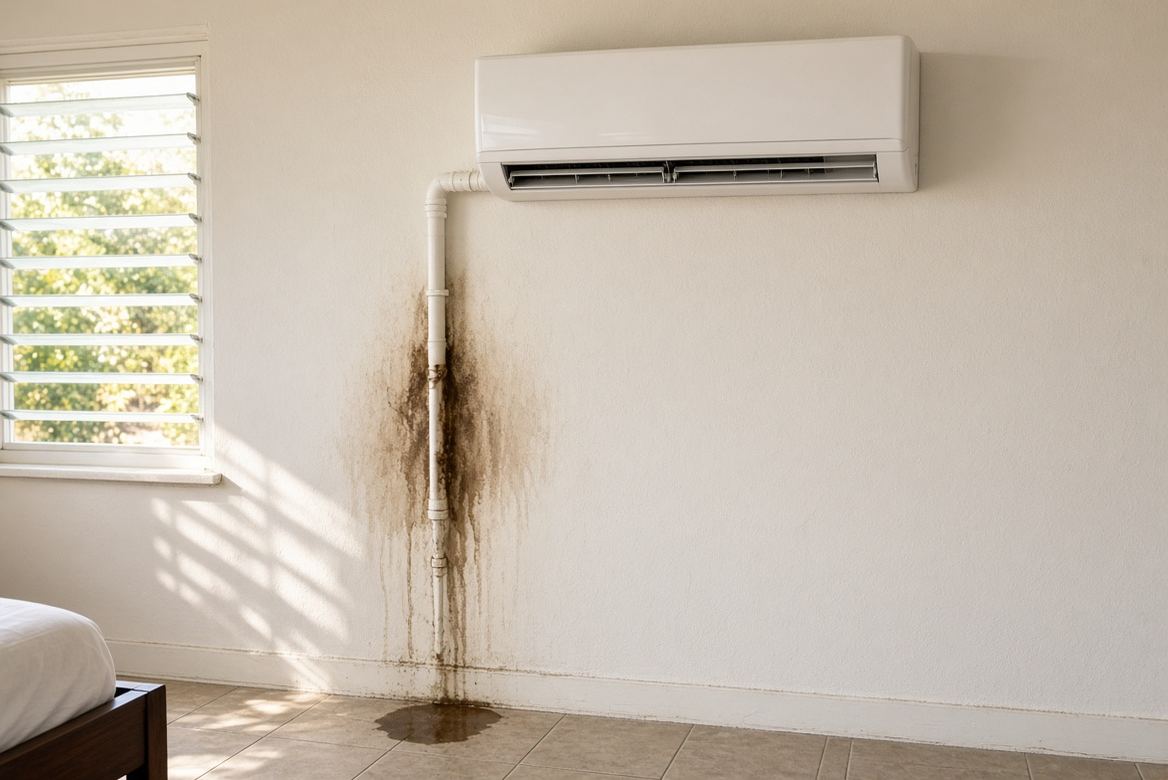
The hallway felt fine. Reed’s powder-room note this morning is vapor behind a shut door: the powder room held overnight air. The guest room told a different story. The wall cassette was quiet. A tea-colored tongue ran down the drywall from the PVC at the left end of the unit. Tile at the baseboard had a dark oval.
That is a drain. Not a humidity complaint. Not a half-bath that held the night. Not the first-floor closet pan.
I already walked the closet that drips while the air still feels cold: the AC was cool, the closet was dripping. I already walked the attic pan that stains a bedroom ceiling: the attic pan stained the ceiling. Today is the unit on the wall.
Why the wall line hides the drip
A lot of coastal Florida additions and condos hang a mini-split because the central air never reaches the guest room. The coil wrings all afternoon. Water is supposed to leave through a slim PVC or vinyl tube, then fall to an outdoor dump or a small pump.
September heat keeps that coil wet for hours. Algae likes the short run inside the plastic. A kink behind the chassis holds a slug. A vinyl tube walks off the barb. The water finds the drywall instead of the yard.
Reed can talk a closed guest room that stays wet after the door shuts: the closed guest room stayed wet. Standing water under a wall cassette is this job. If the paper face already looks stained, pin it: moisture meter after a leak.
After-work check (five minutes)
You do not rebuild a line set on night one. You need a look after the cassette has run.
- Stand in the guest room after work. Flashlight both ends of the chassis, the first foot of PVC, and the baseboard under the stain.
- Look at the joint where the tube leaves the unit. A wet collar or a hanging tube is the diagnosis. A dry joint with an old tea stain is yesterday’s overflow.
- Follow the pipe with your eyes. Name the outdoor dump or the pump reservoir, or admit you cannot name either.
- Towel the first tile. An oval that returns is live water.
If the joint is dry, the tube is seated, and you can name where the water leaves the house, close the door.
If the wall is wet and the tube is loose or silent, stop treating the powder-room air as the first job.
What that tongue usually is
Florida mini-split condensate is warm and dirty. The factory tray inside the chassis is shallow. A vinyl line sags in the chase. A pump in a closet below the unit gums when nobody looks at the reservoir. The drywall drinks.
I will not walk you through cutting a live drain in a finished wall. I will not tell you to force a safety so the guest room stays cold. Look. Photograph. If you can name the disconnect for that cassette and the wall is still wet, stop the cooling call until a licensed tech can give the water a path.
A real dump needs a seated tube and a place you can name. Gravity to an outdoor elbow you can see. Or a pump reservoir that actually empties. The outdoor mulch dump is a different note: the condensate elbow sat in the mulch. Do not assume the wall cassette shares that pipe with the air-handler closet.
The future is still a text. A puck on the tile where the oval already is — pads down, not taped to the plastic chassis. Test with a wet finger. Confirm the phone buzzes from the driveway: your phone knows before the ceiling. Same downhill rule as the closet pan: the overflow pan should text you.
What not to do
- Do not treat a tea stain under a wall cassette as guest-room humidity. Vapor is Reed’s meter. Water on the tile is a drain.
- Do not keep running the cassette “to dry the room” while the line weeps. You are making more water into a failed dump.
- Do not blame the powder room because Reed logged a wet vanity this morning. A stained guest-room wall is not a half-bath door.
- Do not tape the vinyl back onto the barb and call it a repair. Seat it or have a licensed tech replace the short run.
- Do not buy another portable machine for a bedroom that has a wall line dumping on the drywall. Give the water a path. Then measure the air.
If the water is in the chase, the outdoor dump is dry while the wall stays wet, or the chassis drips from the louver, stop. Licensed plumber or HVAC tech on site.
After the wall is honest
Once the joint stays dry through an afternoon you can watch, the air is Reed’s job. Log indoor relative humidity (RH) on an interior guest-room wall, not on the cassette jacket: hygrometer guide. If the house still sits above 60%, that is capacity, not a wall line. Hand it to Reed’s pint chart.
A guest room that still feels closed after a dry joint is the vapor half: the closed guest room stayed wet. Condo coil rooms have the same handoff: condo dehumidifier size. After a pulse that wet assemblies: after-storm sizing. Florida humidity home guide. Closet air after the leak: damp Florida closet.
Run this
- After work tonight, stand under the guest-room cassette. Flashlight the tube joint and the tile. A wet collar, a hanging line, or a new oval on the floor is the diagnosis.
- If the wall is wet, stop the cooling call until the dump has a path you can name. Licensed tech for the short run or the pump. Drop a leak puck on the tile and confirm the phone buzzes.
- When the joint stays dry, pin the stained paper and log relative humidity (RH) for a week. Reed’s powder-room note from this morning is the vapor half in a shut box: the powder room held overnight air. A dry wall line does not dry a closed guest room.
Carlo DeLuca is a third-generation master plumber. Family trade from Long Island, writing from coastal Florida. This note is not a service call. If the wall is soft past the stain or the chassis is dripping from the louver, get a licensed plumber or HVAC tech on site.
If it’s useful, it’s beautiful.