 Carlo DeLuca, Master plumber
As an Amazon Associate I earn from qualifying purchases. Some links are affiliate links.
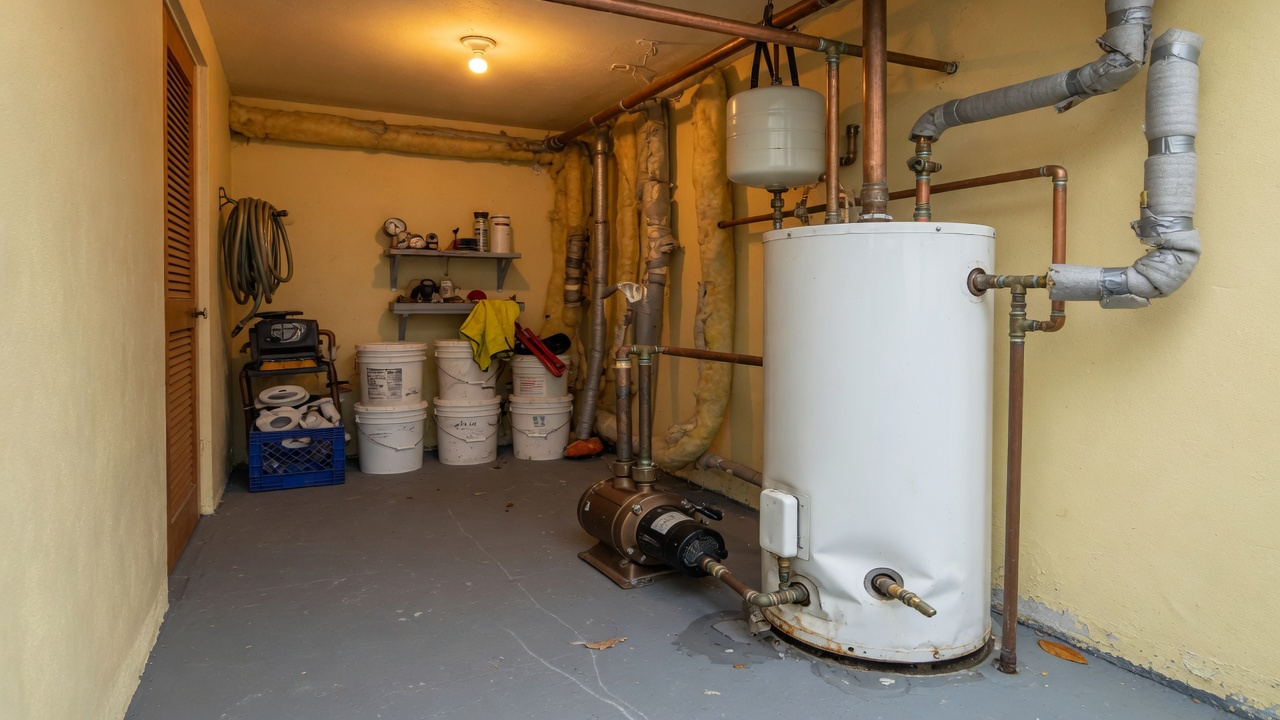
You stand at the shower and you wait. One minute. Three. Five. Cold water goes down the drain so hot water can crawl from the heater at the other end of the house. That is not a mystery. That is pipe volume plus distance. In a Florida ranch with the heater in the garage, the wait is a tax you pay in gallons and in patience.
A recirculation pump moves the cooled water in the hot line back toward the heater so the next fixture is already warm. Convenience is a legitimate reason. Wasting five minutes of water, four times a day, is also a reason. The question is not “is recirc decadent.” The question is how you run the pump.
This note is not a dispatch. I am not opening your heater closet. Licensed plumber for a dedicated return. I will tell you what the meter usually sees.
Two ways to close the loop
Dedicated return. A third pipe brings unused hot water back to the tank. Cleanest thermally. Best on new work or a remodel where the walls are already open.
Crossover at the far fixture. A thermostatic valve under the farthest sink uses the cold line as the return. Retrofit-friendly. The trade: some warm water bleeds into the cold line, so the heater works a little harder and the cold tap can start lukewarm. Fine for many houses. Not magic.
Both need a small circulator. Typical draw is in the 25–60 watt band — a light bulb, not a well pump. The electricity on the pump itself is the small bill. The large bill is heat lost through uninsulated pipe while hot water tours the house.
What the electricity looks like
Use published ranges, not a lab on my bench.
A 40-watt pump running 24 hours is about 1 kWh a day. At a common Florida residential rate around 14¢/kWh, that is roughly $50 a year for the pump motor. A 25-watt unit is closer to $30. A 60-watt unit closer to $75.
The heater is the rest. A loop that stays hot all night dumps heat into the garage, the slab, the cabinets. Industry write-ups of continuous residential recirc often land $80–$150 a year once you add that extra fire. Some houses do worse if the pipes are bare and the loop is long.
Timer, eight hours a day (mornings and evenings): cut the pump hours by two-thirds. Published ballparks drop toward ~$40 a year. You still get hot water when people actually shower.
On-demand (button, occupancy sensor, or a smart tap): the pump runs minutes a day, not hours. Electricity on the motor is a few dollars a year. Wait time is 15–30 seconds instead of five minutes. You did not dump the pipe volume down the drain.
Those are averages for a typical house, not your meter. Your rate, pipe length, insulation, and how often people open a tap will move the number. Read the pump nameplate in watts. Multiply hours. Then decide if the heater is working overtime because the loop never sleeps.
Convenience versus the drain
Four waits a day, five minutes, two gallons a minute is 40 gallons. Times 365 is on the order of 15,000 gallons a year of treated water you never used. Florida utilities are not infinite. Neither is the five minutes you are late.
I will not lecture you into a cold shower to save 40 watts. I will tell you not to run a 40-watt motor plus a heater 24 hours so the guest bath is instant at 3 a.m. Put it on a timer for the hours you live in the house. Or a button by the shower you actually use.
Insulate the hot lines you can see. An uninsulated garage run is a radiator. The pump cannot beat physics.
What not to do
- Do not let a recirc pump run unattended 24/7 “because it is only a light bulb.” The light bulb is not the whole bill.
- Do not treat a crossover valve as a dedicated return. Know which one you have.
- Do not open a pressurized line because a YouTube short made it look like a hose bib. Licensed plumber.
- Do not ignore a leak at the pump unions. A wet heater closet is a different note.
If the air-handler pan is the thing that is wet, that is not this job. That is the overflow: the overflow pan should text you. Reed can talk the air after the pipes are honest: right-size the AC, then wring humidity.
Run this
- Time the wait at the farthest hot fixture. Count gallons if you can (bucket, or gpm × minutes).
- Read the circulator nameplate. Watts × hours × your kWh rate is the motor cost. Add “does this loop stay hot overnight?”
- If you already have a pump, put it on a timer for occupied hours or a demand button before you buy a bigger heater. If you do not have a pump and the wait is five minutes, ask a plumber for dedicated return versus crossover — and for a control that sleeps when you do.
If it’s useful, it’s beautiful.