 Reed Lang, Field editor
As an Amazon Associate I earn from qualifying purchases. Some links are affiliate links.
The living room felt fine at 75°F. The wood floor still felt heavy. That is often not the thermostat. That is air under the house after a September band.
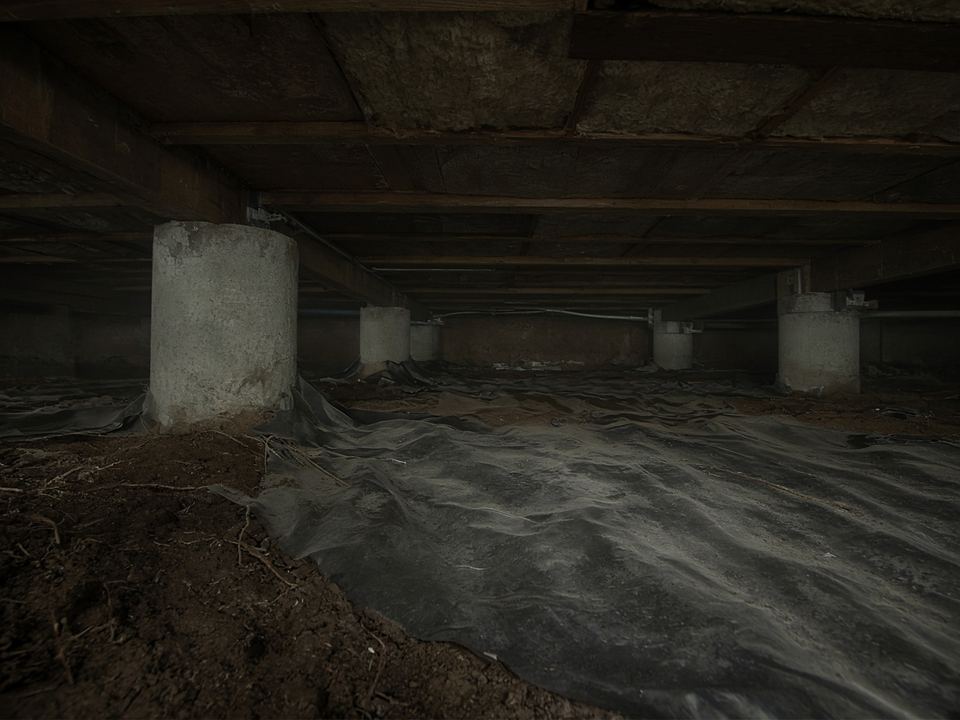
Peak week of hurricane season still dumps overnight rain even when the basin is quiet. Water hits the soil, the stem wall, and the first joist bay. Living-space relative humidity (RH) can sit in the mid-50s while the crawl holds 70% and feeds the floor from below. The house AC never sees that bay.
Treat the crawl as a room. A hot garage is one climate. A closed crawl is another. Do not judge either from the sofa.
Why the crawl stays wet after the radar clears
Outdoor relative humidity (RH) after a Florida shower often stays in the 80s. An unconditioned crawl tracks that air through vents, door leaks, and open dirt. Encapsulation helps. It does not erase vapor if ground moisture still has a path and no machine is pulling it.
Living-space target on this site is about 45–55% relative humidity (RH). Sustained above 60% in occupied rooms is the action cue. Crawl air will read higher. That is expected. The question is the gap and whether the floor assembly is still taking on water.
Guide: Florida humidity home guide. Class of machine: portable vs crawl space dehumidifier. Do not drop a bedroom cube under the house and call the zone handled.
If last night rained, compare three numbers, not one.
Morning check (ten minutes, then a logger)
You do not need to live in the crawl. You need a number from it.
- Living room, interior wall. Not on the supply. Not on the glass.
- A closed bedroom that stayed dry. That is your reference.
- Crawl or mechanical void. Hang or set the logger off the dirt, away from the unit exhaust.
Read relative humidity (RH) in all three after sunrise. If the crawl sits 15–20 points above the dry bedroom and the floor feels cool and heavy, the under-house air is still loaded. Log it for 24 hours. A one-look display lies after a pulse of rain.
Tempo Disc Maxi is the USA-made logger we list when you want a crawl vs living-room pair you can read later. FloridaDamp is an Amazon associate — we earn from qualifying purchases. I still point at this one because it keeps a trail after you leave the hatch, not because anyone paid for a review.
If a band drove water at the stem wall, pin the first two feet of interior drywall on that side and compare to a known-dry closet. Looking dry is not a reading. Moisture meter after a leak.
Hand standing water to plumbing
If you see a puddle at a heater, a washer, or a closet pan, that is not a relative humidity (RH) problem first. That is water on a floor. Carlo walked the placement list this morning: five places a leak puck earns rent. Fix or call out the leak. Then measure the air. A wet pan does not make a crawl dehumidifier the first tool.
What not to do under the house
- Do not treat sticky floors as a reason to drop the thermostat to 68°F. Cold living-room air is not dry crawl air. We already covered the clammy trick: why 68 still felt clammy.
- Do not park a 35-pint bedroom cube in a dirt bay and empty a bucket on your belly. That is the wrong class. See the pint chart for living zones and the crawl guide for under-house duty.
- Do not run air movers in the crawl with no dehumidifier. You move wet air into the joists.
- Do not crack foundation vents “to dry it out” after a rain band. You import more wet outdoor air.
- Do not skip the garage shared wall. Rain under a door wets that first. Florida garage dehumidifier.
Run this
- Log crawl relative humidity (RH) against a dry bedroom for 24 hours at a normal living-room setpoint (74–76°F is a common Florida comfort band).
- If the crawl stays loaded and the floor stays heavy, size a crawl-class continuous-drain unit for that void. Living rooms still use the pint chart. After a rain pulse that wet assemblies, cover leftover moisture: after-storm sizing.
- Drain continuously. Hose downhill if you have the fall. A pump if the drain is uphill. Buckets lose to September, especially where you cannot stand up.
Santa Fe Compact70 is the USA-built crawl and low-clearance pick on this site. Hose it. Confirm with the logger. Do not badge a bedroom appliance as crawl gear.
If landfall week is still on the calendar, stage before the cone, not after: hurricane season moisture. If the assembly is already wet, the dry-out stack is post-storm dry-out. Board first when a cone is actually on you.
Peak week still means moisture week under the house. Quiet radar does not dry soil. Measure first. Size the crawl as its own room. Drain continuously.
Reed Lang is the field editor at FloridaDamp. Notes use published specs and common Florida rooms. Not a licensed contractor. Not a lab.