Quick answer
Fix drainage and vapor-barrier gaps first, then measure the crawl against the living room for 7 days with a USA-made BlueMaestro Disc Maxi logger. SensorPush HT.w is the other USA option, linked as an Amazon search while Amazon shows it unavailable. Check cupping floors and joists with a Delmhorst pin meter, and dry an encapsulated crawl that stays above about 60% relative humidity (RH) with a USA-built AprilAire on continuous drain, with a PumpSpy pump when you need lift. A living-room portable is not crawl gear.
As an Amazon Associate I earn from qualifying purchases. Some links are affiliate links.
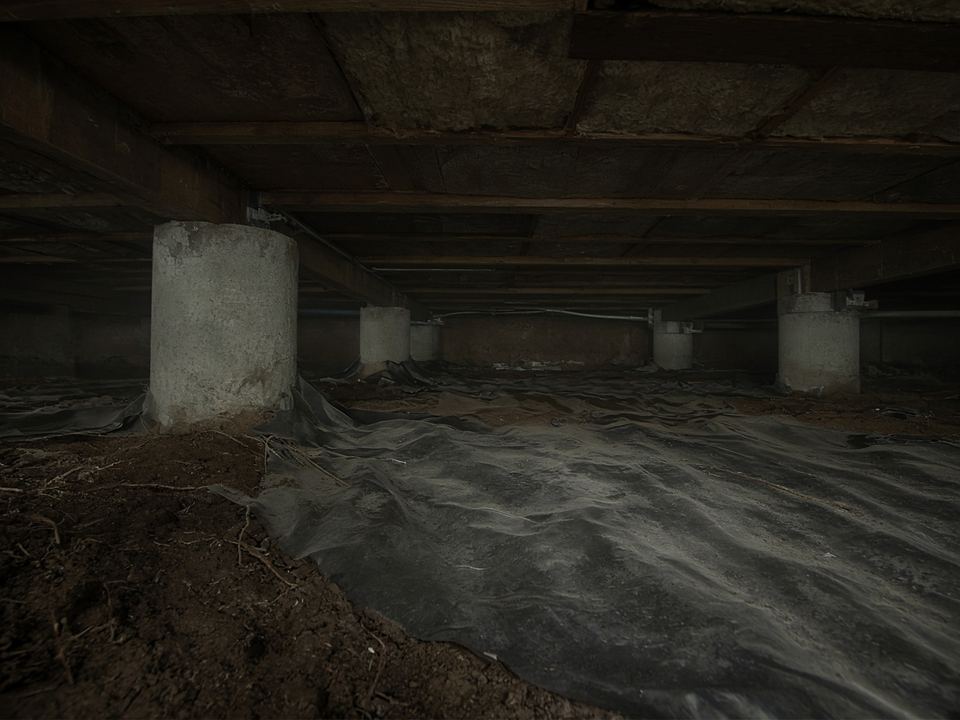
Florida crawlspaces are moisture machines. Outdoor relative humidity (RH) is already high, ground water and wet soil keep the dirt floor damp, and even a plastic vapor barrier can trap humid air under the house if nothing is drying it. Homeowners notice it upstairs first: musty floors, soft carpet edges, cupping hardwood, sticky baseboards, or a smell that comes back every summer. Based on specs and common Florida use cases (not lab tests), a crawl dehumidifier only helps after you know whether the crawl is open, partially enclosed, or fully encapsulated—and after you fix drainage and vapor-barrier gaps that keep feeding the space.
Target relative humidity (RH) for a sealed or encapsulated crawl is commonly 45–55%, with sustained readings kept under about 60%. An open, dirt-floor crawl with no encapsulation is closer to outdoor air; dumping a bedroom portable down there usually fails. Pair this page with portable vs crawlspace dehumidifiers, the size chart, and the hygrometer guide.
USA-first note: Featured product slots below stick to Made / Assembled in USA picks we can cite from the Amazon listing and the maker. Where no verified USA option exists (consumer 30–70 pint portables), we say so plainly and do not put a Made in America graphic on the import.
What’s going on under the house?
| What you notice | Likely cause | First move |
|---|---|---|
| Musty smell upstairs, floors feel clammy | Crawl relative humidity (RH) high; air leaks through floor gaps and HVAC boots | Measure crawl vs living room 7 days; inspect vapor barrier and vents |
| Hardwood cupping, soft edges, or buckling | Wood absorbing moisture from below (and sometimes from AC short-cycles) | Pin-meter joists and flooring underside; dry the crawl, not just the room |
| Standing water or wet dirt after rain | Grade, gutters, or plumbing leak feeding the crawl | Fix drainage / plumbing first—dehumidifiers do not pump out flood water |
| Encapsulated crawl still 60%+ relative humidity (RH) | Plastic liner + sealed vents with no active drying | Log relative humidity (RH); add crawl-class dehumidifier on continuous drain |
| Open dirt crawl with foundation vents | Outdoor air by design; relative humidity (RH) tracks the weather | Encapsulation + drainage plan before equipment; portable living-room units struggle here |
| Whole house sticky, crawl included | Oversized / short-cycling AC or whole-home relative humidity (RH) | See AC vs dehumidifier; size for the house, not only the crawl |
Rule of thumb: fix water and vapor first, then measure, then dehumidify. If you can see puddles, wet insulation hanging off joists, or a torn vapor barrier after every storm, buy a dehumidifier second—not first.
Quick checklist before you buy
- Put one USA-made hygrometer in the crawl and one in the main living area for 7 days. Compare relative humidity (RH), not just temperature.
- Know your crawl type: open dirt with vents, partially enclosed, or fully encapsulated (sealed liner, sealed vents, often a sump).
- Walk the perimeter after a hard rain: gutters dumping at the foundation, negative grade, clogged downspouts, or a wet spot under a bathroom are equipment killers.
- Confirm a continuous drain path before you buy. Nobody wants to crawl under the house twice a week to empty a bucket—plan gravity drain to a sump or exterior, or add a condensate pump (PumpSpy below).
- Check wood with a pin meter if floors are cupping or joists look stained. High wood moisture is a dry-out and building-envelope job, not perfume and hope.
- Size with the size chart and your log data. Crawl units are continuous-duty machines; living-room pint ratings do not map one-to-one.
Safety: Florida crawls are tight, dark, and often home to wildlife. Wear gloves, keep a headlamp, watch for wiring and rusty nails, and do not run extension cords through standing water.
Product picks (Good / Better / Best) — Made in America featured slots
Educational recommendations based on specs, common Florida crawlspace use cases, and verified USA / Assembled-USA claims from the Amazon listing and the maker.
Good — USA logger with dew point (BlueMaestro Disc Maxi)
Best for logging an encapsulated crawl over weeks: after new encapsulation, while the house sits empty (snowbirds), or to show an HVAC / waterproofing contractor that the crawl stays above 60%. Dew-point context also explains when wood and metal surfaces stay damp even if the air “feels” cooler under the house.
Search anchor: BlueMaestro Disc Maxi USA made wireless hygrometer logger
Made in USA cite: Amazon title/bullets “USA Made”; “designed, developed, and manufactured in the USA”; Texas support.
- Log crawl vs house through a storm week and a dry-front week
- Useful with the snowbird kit when the house is closed for months
- Higher price than overseas stick packs—framed as the USA logger path, not a silent ThermoPro swap
Search-only alternative — SensorPush HT.w
Another USA option, linked as a search while Amazon shows it unavailable. You cannot manage crawl humidity from the thermostat upstairs. HT.w is the water-resistant SensorPush model, which handles a damp crawl better than the indoor-only HT1.
Made in USA cite: Amazon title/subtitle “USA made”; sensorpush.com HT.w: “designed, supported, and now made in the USA.” (Not the HT1, which is China-made.)
- Hang or place mid-crawl, off the dirt and out of the dehumidifier discharge plume
- Compare crawl vs living-room readings for a full week, including a rainy day
- Amazon sells the HT.w as a single sensor, so plan on two (crawl and living room). There is no multipack.
The Amazon Buy box on this model is not available right now, so this is a search link.
Better — USA wood moisture check (Delmhorst BDX-20)
Best when floors are cupping, joists look stained, or you need to prove the wood is wet after a plumbing drip or storm. A pin meter checks materials, not air relative humidity (RH), so pair it with a hygrometer.
Search anchor: Delmhorst BDX-20 pin moisture meter Assembled USA crawl joists
Made in USA cite: delmhorst.com: “All products are designed and assembled in the USA” (New Jersey facility).
- Compare a suspect joist or subfloor spot against a dry reference of the same species/thickness
- Check around bathroom drains, HVAC boots, and exterior walls where storms push water in
- After drying equipment runs, re-check the same spots so you know when to stop
Best crawl drying — USA AprilAire (whole-home / mechanical-room path)
AprilAire leads the drying picks while the Santa Fe Compact70 below is out of stock on Amazon. Use this path after drainage and vapor-barrier work, when a week of logs still shows the crawl high.
If the crawl and the living space both sit above about 55%, or you have access for a whole-house class unit near the air handler / mechanical room, treat the house—not only the dirt pocket. AprilAire E-series units are USA-built whole-house class machines an HVAC contractor can tie into ducts or run as dedicated drying with continuous drain.
Search anchor: AprilAire E080 Pro 80 pint whole house dehumidifier USA
Made in USA cite: Amazon bullets + description “designed and manufactured in the U.S.A.”; AprilAire site: “Designed and manufactured in the USA.”
- ~80-pint class; set humidistat near 45–50% and confirm with logs
- Continuous drain is required; plan the condensate route before install
Larger homes (100-pint class, casters for mechanical-room moves):
Search anchor: AprilAire E100C Pro 100 pint dehumidifier with castors
Made in USA cite: Amazon: “designed and manufactured in the U.S.A.”
100-pint bundle with condensate pump, drain hose, and hanging kit (handy when the drain is above the unit or the crawl needs lift):
Search anchor: AprilAire E100PZ 100 pint dehumidifier pump hang kit
Made in USA cite: Amazon description: “designed and assembled in the USA utilizing US and global components.”
When back in stock — USA Santa Fe Compact70
Santa Fe Compact70 is engineered for sealed or semi-conditioned low-clearance spaces—exactly the job of an encapsulated Florida crawl. Low profile, continuous-duty design, and USA manufacture (Madison, WI / Therma-Stor family). Not a bedroom portable with a longer hose.
Search anchor: Santa Fe Compact70 crawl space dehumidifier USA
Made in USA cite: Santa Fe / Therma-Stor sell sheets: “Engineered and manufactured in America,” “Manufactured in Madison, WI.”
- Continuous drain to a sump, condensate line, or approved exterior drain; add PumpSpy below if you need lift
- Set on a level pad or hanging kit per installer guidance; keep clear of dirt contact and standing water
- Aim the humidistat near 50% and confirm with SensorPush or BlueMaestro—not by smell alone
- Amazon showed this model unavailable on October 12, 2026. Until it is back, AprilAire below is the in-stock drying path.
The Amazon Buy box on this model is not available right now, so this is a search link.
Premium storm dry-out — USA pro portable (Dri-Eaz Revolution)
For temporary drying after a plumbing flood, storm surge into the crawl, or a wet encapsulation job—not as a daily crawl appliance. Fix the water source first, then dry, then decide on permanent equipment.
Search anchor: Dri-Eaz Revolution LGR commercial dehumidifier USA
Made in USA cite: Amazon: “Made in the USA with globally sourced components… designed, molded, assembled, and supported in Burlington, Washington.”
- Built-in pump; run the hose to a real drain, not onto the vapor barrier
- Often more useful after a leak event than as year-round crawl gear; see post-storm dry-out and the hurricane moisture kit
This model has no Amazon Buy box right now, so this is a search link.
Drain insurance — Assembled USA condensate pump (PumpSpy CP-120)
Best when the crawl dehumidifier cannot gravity-drain to a sump or exterior outlet. FloridaDamp features PumpSpy—not Little Giant—on crawl drain cards.
Search anchor: PumpSpy condensate pump Assembled USA crawl dehumidifier
Made in USA cite: Amazon bullet: assembled in the USA using domestic and imported parts; pumpspy.com: electronics and pumps assembled in Kalamazoo, MI from foreign and domestic parts.
- Size the pump to the dehumidifier’s condensate rate; keep the reservoir accessible for service
- Route discharge to an approved drain; never into a dryer vent or onto the vapor barrier
- Replaces Little Giant on FloridaDamp featured cards (Little Giant VCMA class is typically Mexico COO)
Value option (not USA-made, no badge) — 70-pint portable with pump
There is no verified Made-in-USA consumer 30–70 pint portable. Some people try a consumer 70-pint in a crawl because it costs less than Santa Fe / AprilAire. It is overseas-made, does not get the Made in America graphic, and living-room portables are a poor match for dirt, dust, and continuous crawl duty. For a real crawl job, the USA crawl-class or whole-home path above is the better fit. See portable vs crawlspace for why the categories differ.
Search anchor: Keystone 70 pint dehumidifier with pump
- US brand; manufactured overseas. We could not verify a Made in USA claim for this ASIN
- Built-in pump helps with continuous drain, but the machine is still a living-space portable class
- Honest gap for shoppers who refuse crawl-class pricing—not a featured USA card
The Amazon Buy box on this model is often unavailable or unstable from bot views, so this is a value search, not a featured buy.
Honest gaps (crawl niches we will not fake)
| Niche | Status |
|---|---|
| Budget “crawl dehumidifier” imports (AlorAir class) | Not featured — overseas; Santa Fe / AprilAire are the USA path |
| Living-room portable as permanent crawl gear | Wrong tool — see portable vs crawlspace |
| Encapsulation liner / tape / sump kits | Not featured as ASINs here — waterproofing contractor / encapsulation package; measure and dry after the liner goes in |
| Little Giant condensate pump | Not featured — typically Mexico COO; PumpSpy is the Assembled-USA card |
| Budget hygrometer packs (ThermoPro / Govee class) | Not featured — overseas; SensorPush and BlueMaestro are the USA path |
| Consumer 30–50 pint “put it under the house” portable | Gap — no verified USA option; do not badge Honeywell / Midea Cube class |
When NOT to put a living-room portable in the crawl
- Bucket emptying under the house. If you cannot commit to continuous drain (hose or pump), do not buy a portable for the crawl.
- Open dirt crawl with free outdoor air. You are drying the neighborhood. Encapsulation + drainage first.
- Standing water or active leak. Pump out and fix the source; a dehumidifier is not a flood pump.
- Hot garage-style heat or freezing nights with no auto-defrost plan. Match the machine’s rated operating range to the crawl log.
- The upstairs is fine and the crawl is the only damp pocket—but you still bought a bedroom unit. Crawl-class low-profile continuous-duty machines exist for a reason. Details: portable vs crawlspace dehumidifier.
Mid-October note (2026)
Florida’s rainy season is tapering by mid-October, but crawl relative humidity (RH) often stays high year-round—especially in encapsulated crawls with no dehumidifier and in coastal / Central Florida dirt crawls that never fully dry. Cooler nights can make upstairs floors feel clammy even when the thermostat looks fine. Snowbird arrivals are starting: if the house will sit empty or go to a vacation setback, check the crawl before winter AC habit changes. Log crawl vs living room for a week, empty any temporary buckets, confirm continuous drain, and leave monitoring in place. Hurricane season still runs through November 30—after wind-driven rain, re-check the vapor barrier and wood moisture; start with the hurricane moisture kit if the house took weather.
Placement tips that matter in Florida
- Hygrometers: read crawl air, not the dirt surface or the dehumidifier outlet.
- Dehumidifier: level, clear intake/exhaust, secondary drain pan when code or common sense asks for it, and service access without tearing the liner.
- Condensate: approved drain only. Overflow under the house becomes mold on the vapor barrier and wet insulation.
- Encapsulation: seal liner seams and pier wraps; a dehumidifier cannot outrun a shredded barrier after every storm.
- Coastal homes: salt air plus humidity accelerates corrosion—see the coastal Florida dehumidifier guide for placement habits that travel well to crawls near the water.
Related FloridaDamp guides
- Portable vs crawlspace dehumidifier
- Best dehumidifier size for Florida humidity
- Best dehumidifier for a Florida garage
- Coastal Florida dehumidifier
- Best hygrometer for a humid Florida home
- Drywall moisture after a leak
- AC vs dehumidifier in Florida
- Hurricane moisture kit
- Florida snowbird moisture kit
- Measure before you buy
Bottom line
Florida crawls stay damp even when the rainy season eases. Measure crawl vs living room with a USA-made BlueMaestro Disc Maxi logger (Good), check cupping floors and joists with a Delmhorst meter (Better), and keep SensorPush HT.w as the other USA option, linked as an Amazon search while Amazon shows it unavailable. Fix drainage and vapor-barrier failures, then dry an encapsulated crawl with a USA-built AprilAire on continuous drain — AprilAire leads drying while the Santa Fe Compact70 stays a back-in-stock search — with PumpSpy when you need lift and the Dri-Eaz Revolution as a search-only option for temporary storm dry-out. The Keystone 70-pint is a no-badge search-only value option because no USA consumer portable exists, and it is a weak match for crawl duty. Musty floors usually mean moisture under the house with nowhere to go.
Byline: FloridaDamp. Educational product picks based on manufacturer specs, common Florida use cases, and cited Made / Assembled in USA claims—not laboratory testing by FloridaDamp.