 Carlo DeLuca, Master plumber
As an Amazon Associate I earn from qualifying purchases. Some links are affiliate links.
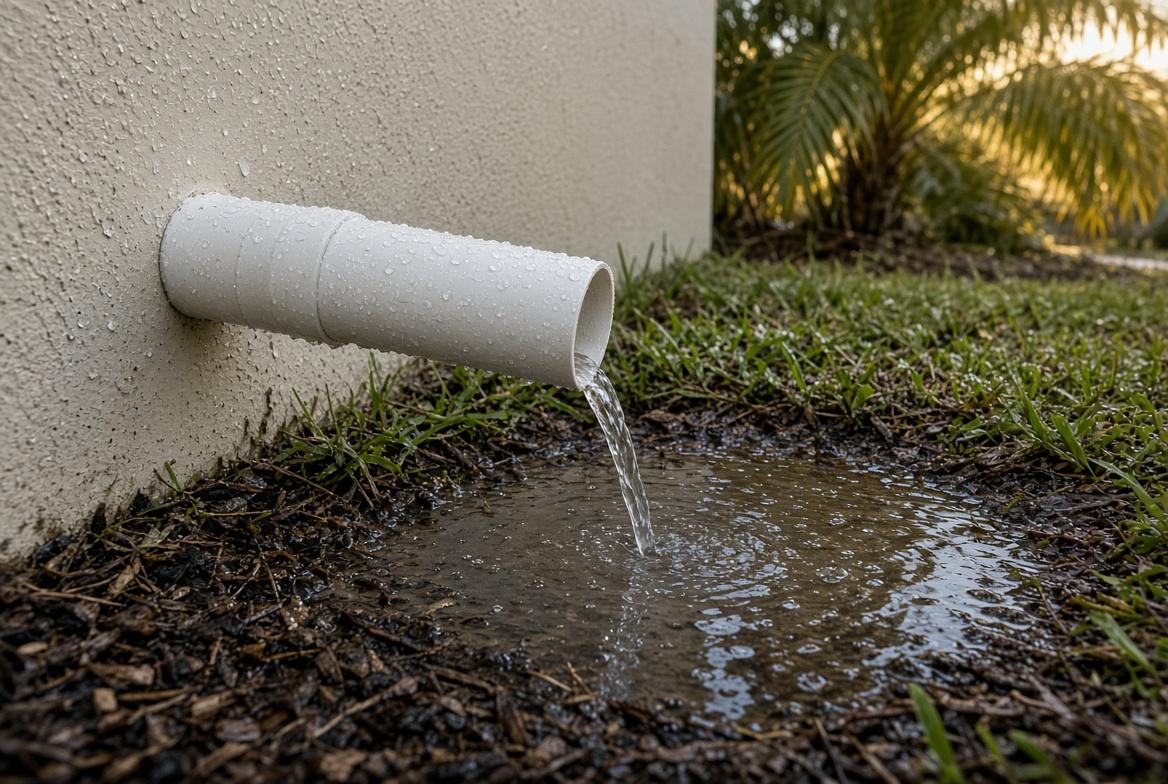
The closet door was open after work. The air handler sat quiet. The metal pan under the coil held standing water. The primary PVC line looked open at the cleanout. Outside, the white dump pipe left the stucco and ended in a shallow pool of rainwater. The pipe was wet. The mulch and grass around it were wet. The dump was under water.
An outdoor condensate dump is the end of the primary line. Gravity or a pump sends the water the coil makes out of the closet and through that pipe. When the dump sits in standing water after a heavy band, the water cannot leave. The line backs up. The trap fills past its seal. The pan inside the closet becomes the only place left for the condensate. The outdoor end looks like it is working because the pipe is wet. The water is not moving. It is sitting.
This is not a clogged primary line. The line can be clear all the way to the wall. This is not a dry trap after a quiet week. The trap held water. The outdoor dump was the stop. Florida rain can leave a low spot or a settled bed of mulch that holds water against the pipe. Once the water level outside reaches the end of the dump, the condensate has nowhere to go. The pan fills while the unit runs. The float switch may cut the coil if the water rises high enough. The floor still gets wet if the pan overflows first.
After-work check
Open the air-handler closet after the unit has run through the afternoon. Look at the pan first. Standing water means the coil made condensate and the primary path did not take it. Then walk outside. Find the white PVC dump. It should sit above grade and dump onto open ground or a splash block where water can leave. If the pipe ends in a puddle, or if the mulch has been built up around it, the dump is under water. The outdoor end is the reason the pan is full.
The closet guide covers the rest of the assembly: air-handler closet. After a heavy band the same backup can stain the ceiling below: after-storm.
Do not
Do not keep running the air to dry the closet. You are making more water into a pan that cannot empty. Do not cut the PVC and replace the whole run because the pan is wet. The line can be fine. The outdoor dump is the stop. Do not pour cleaner down the cleanout and call it fixed. The cleanout is clear. The water is sitting outside. Do not treat a wet floor under the closet as a humidity problem first. The house can feel fine while the closet holds water the dump never sent away. Measure living-space relative humidity (RH) with Reed if the house still feels heavy after the pan is dry and the dump is clear: how to measure. Do not open a pressurized supply line. The water in the pan is condensate. Do not ignore the outdoor puddle because the indoor floor looks only a little wet. The next run will make more.
Run this
- Shut the unit at the thermostat. Empty the pan into a bucket. Confirm the water stops when the coil is off.
- Clear the outdoor dump. Move mulch and soil away from the pipe so the end sits above the wet ground. Confirm water can leave the pipe and run away from the wall. If the low spot holds water after every band, raise the dump or add a short extension that lands on higher ground.
- Confirm the primary line has fall all the way to the dump and the trap holds a seal. Leave a leak puck in the dry pan so the phone knows next time the pan fills. The overflow pan should text you before the ceiling does. See the overflow pan should text you.
A clear outdoor dump keeps the water from backing into the closet. When the primary path is open and the dump sits above the water, the pan stays dry. The PumpSpy CP-120 is assembled in the USA and built to move the volume a Florida closet makes when the outdoor dump is doing its job.
FloridaDamp is an Amazon associate — we earn from qualifying purchases. I still point at this one because it is an assembled-USA condensate pump that will actually drain a closet pan, not because anyone paid for a review.
Clear the dump. Empty the pan. Keep the water moving outside.
If it’s useful, it’s beautiful.
Carlo DeLuca is a third-generation master plumber writing from coastal Florida. Notes are educational. Not a service call.