 Carlo DeLuca, Master plumber
As an Amazon Associate I earn from qualifying purchases. Some links are affiliate links.
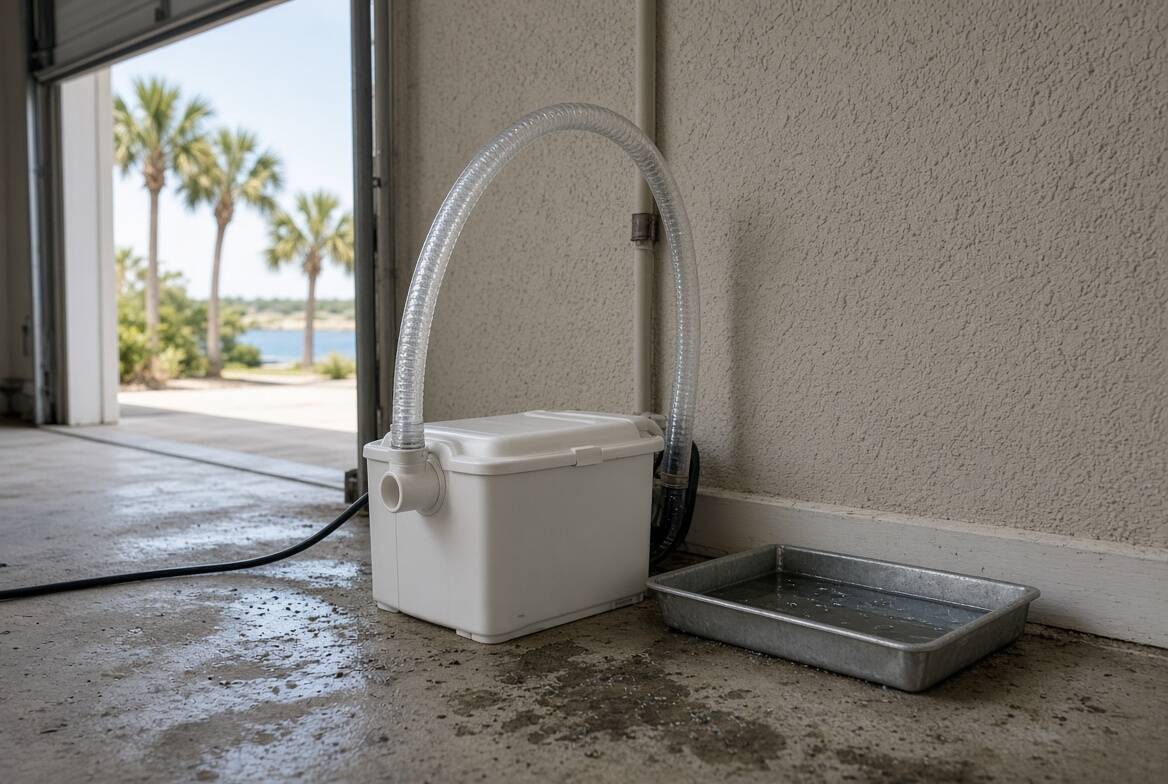
The garage door was open. The air handler sat quiet on its stand. The metal pan under the coil held a half-inch of water. The white condensate pump on the slab had run. Its clear vinyl hose left the pump, climbed the stucco wall in a loop, then dropped toward the outdoor dump. The outdoor end was dry. The water that left the pan never made it past the high spot in the hose.
A condensate pump is supposed to lift water when gravity cannot. Florida closets and garages sit below the outdoor dump more often than not. The pump empties the pan. The discharge hose has to fall all the way to the outside or the water sits in the loop and siphons back when the pump stops. A high spot in the hose is the same as no discharge at all. The pump cycles. The pan refills. The ceiling stays dry until the float is ignored or the pump fails.
This is not a clogged primary line. A clogged line fills the pan and the outdoor dump stays dry for a different reason. This is the path after the pump. The hose climbed because someone tucked it behind a shelf or the wall had no straight run. Water finds the high spot and stays there. By morning the pan is full again.
After-work check
Open the garage after the unit has run. Look at the pan first. Standing water means the coil made condensate and it did not leave the space. Then look at the pump. A wet pump with a dry outdoor dump means the water left the pan and stopped in the hose. Follow the clear vinyl from the pump outlet. Any loop that climbs above the pump outlet and then drops is a high spot. The water sits in the climb. The outdoor dump stays dry. The closet guide shows the rest of the assembly: air-handler closet. After a heavy band the same backup can stain the ceiling below: after-storm.
Do not
Do not keep running the air to “dry the garage.” You are making more water into a pan the hose cannot empty. Do not pour bleach down the primary line and call the pump fixed. The primary can be fine. The discharge hose is the problem. Do not treat a full pan as a humidity problem first. The house can feel fine while the garage holds water the pump never sent outside. Measure living-space relative humidity (RH) with Reed if the house still feels heavy after the pan is dry and the hose falls: how to measure. Do not open a pressurized supply line. The water in the pan is condensate. Do not replace the pump because the pan is wet. The pump can be fine. The hose never let the water leave.
Run this
- Shut the unit at the thermostat and at the breaker if the garage is wet. Empty the pan into a bucket. Confirm the water stops when the coil is off.
- Check the discharge hose. The run from the pump outlet to the outdoor dump should fall the whole way. No loops that climb. No tucks behind a shelf. A high spot needs a lower path or a shorter hose so the water can leave.
- Confirm the outdoor dump is clear and the secondary stub is open. Leave a leak puck in the dry pan so the phone knows next time. The overflow pan should text you before the ceiling does. See the overflow pan should text you.
A hose that falls keeps the pump from filling the pan once the primary path is blocked. When the garage sits below the outdoor dump a pump still has to lift the water. The PumpSpy CP-120 is assembled in the USA and built to move the volume a Florida closet makes when the hose is doing its job.
FloridaDamp is an Amazon associate — we earn from qualifying purchases. I still point at this one because it is an assembled-USA condensate pump that will actually drain a closet pan, not because anyone paid for a review.
Lower the hose. Empty the pan. Keep the discharge where the water can leave.
If it’s useful, it’s beautiful.
Carlo DeLuca is a third-generation master plumber writing from coastal Florida. Notes are educational. Not a service call.